If you have ever listened to a Formula 1 radio broadcast, you have likely heard a race engineer utter a phrase that sounds deceptively simple: "We have the pit delta to cover." To the casual viewer, it sounds like a precise measurement—a fixed number of seconds that separates the car in the pits from the car on the track. In reality, that number is a ghost.
During my eight seasons on the pit wall for endurance racing, I learned that "pit delta" is rarely a constant. It is a dynamic variable, influenced by pit lane length, speed limits, the entry and exit configurations, and—most importantly—the traffic density. When Homepage we talk about an undercut attempt, we aren't just calculating time; we are managing a probability distribution.
Defining the Pit Delta: More Than Just Stopwatch Math
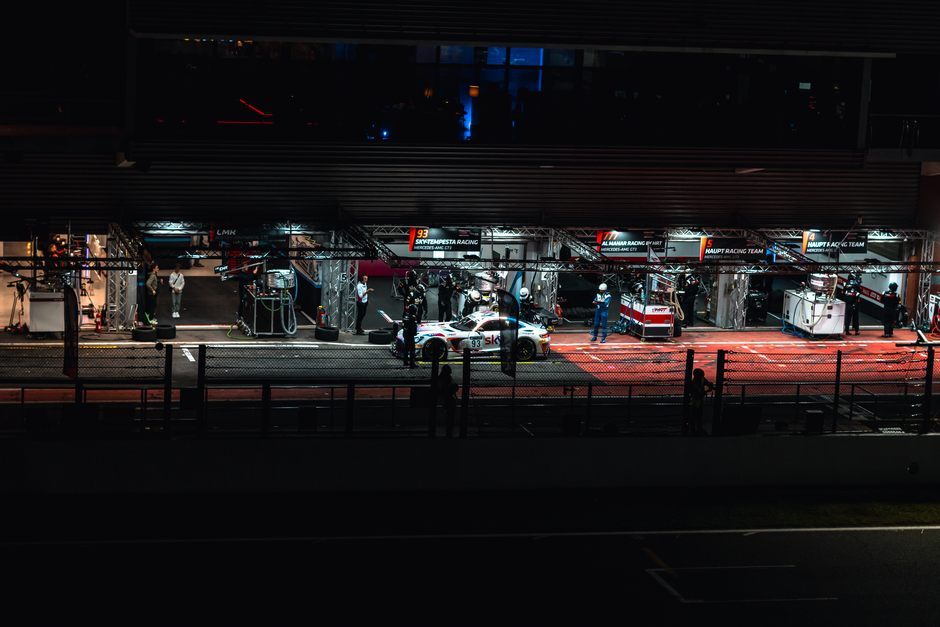
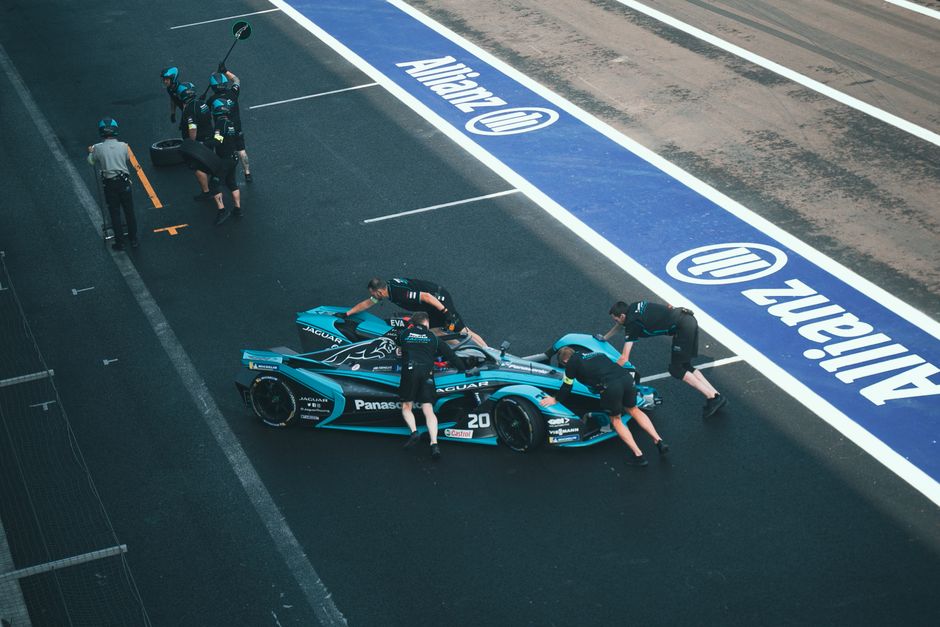
At its most basic level, the pit delta is the time cost of a green-flag pit stop. If you drive at racing speed, you cover a certain distance in a specific amount of time. If you peel off into the pit lane, you follow a slower, longer path. The difference between those two is your delta.
Let’s do a quick sanity check to ensure we aren’t oversimplifying. If a pit lane is 350 meters long with a speed limit of 80 km/h (approx. 22.2 m/s), the traverse time is roughly 15.7 seconds. Add in the deceleration zone, the stationary time for a tire change (let’s assume 2.5 seconds), and the acceleration ramp-up, and you’re looking at a total delta of roughly 22–24 seconds. Any engineer who treats this as a static "23-second" figure will lose the race. You must account for the specific GPS telemetry of the entry line and the pit exit merge point.
While industry leaders like MrQ have popularized the idea of using predictive modeling to understand outcomes in high-stakes environments, the same principles apply here. We don't guess; we calculate the range of outcomes based on telemetry density.
The Undercut: Chasing the Clean Air
The "undercut" is the strategic maneuver of pitting a lap earlier than your rival to capitalize on the performance of fresh tires. The premise is that while your opponent is struggling on degraded rubber, you will be lapping significantly faster. By the time they emerge from their own pit stop, your "delta" is erased by your pace advantage.
However, the undercut is never a guarantee. It is highly dependent on "clean air."
The Variables of the Undercut
- Out-Lap Performance: Can the driver bring the tires up to the operating window immediately? In-Lap Degradation: Was the car behind already suffering from "thermal cliff" effects? Traffic: The silent killer of any undercut.
When you attempt an undercut, you are essentially gambling that your clean air performance over one lap will be greater than the pit delta you just surrendered. If you hit a backmarker on your out-lap, you lose everything. This is why we rely on telemetry—massive amounts of high-frequency data—to map where the traffic is and predict where it will be at the moment the cars converge.
The Monte Carlo Principle: Strategy as Probability
One of the biggest frustrations in modern motorsport coverage is the fetishization of "instinct." We are told that a strategist made a "brilliant call" based on a feeling. In reality, the top teams run Monte Carlo simulations. These simulations take the current telemetry data and run thousands of possible race scenarios—varying tire degradation rates, potential yellow flags, and traffic density outcomes.
As noted in various studies published in Applied Sciences (MDPI), modeling race dynamics requires a multi-layered approach to uncertainty. You how to use race engineer tools aren't calculating one path; you are calculating a probability map.
If the simulation shows a 62% chance of success, you aren't "certain" it will work. You are simply making the mathematically superior play. If it fails because the driver locked a wheel, it wasn't a bad strategy; it was a realization of a 38% probability.
Data Density and the Pit Wall
The sophistication of modern strategy is largely a product of data density. As discussed in recent analysis pieces from the MIT Technology Review, the integration of AI and high-frequency data streams into sports has moved us away from simple lap-time averages to real-time predictive modeling. We track tire carcass temperatures, brake wear, and even the vibration frequency of individual sensors.
However, I must call out a limitation here: even with the best data, we are often comparing apples to oranges. A car with a low-fuel load handles differently than a car with a full tank, even if their lap times are identical on the leaderboard. If you base your undercut timing on the leaderboard pace without adjusting for fuel mass or engine maps, your calculation is fundamentally flawed. Data is only as good as the context you assign to it.
Why We Avoid "Game-Changing" Narratives
You will notice that I avoid calling these tools "game-changing." That term is a hallmark of people who don't actually sit on the pit wall. Strategy isn't about one magic bullet that changes the game; it is about the aggregation of thousands of tiny advantages. It is the cumulative effect of making the "correct" probabilistic decision 95% of the time.
When a strategist decides to pull the trigger on an undercut, they are looking at a screen filled with heat maps of the circuit, predicting where the current leader will encounter a gap in traffic. They are looking at their own driver's tire wear trend and projecting the degradation curve. They are weighing the delta of the pit lane against the anticipated delta of the dirty air they might encounter.
Conclusion: The Certainty Trap
If there is one thing you take away from this, let it be this: never mistake strategy for a guarantee. The pit wall is not a place for certainty; it is a place for risk management.
The next time you see a car dive into the pits earlier than expected, don't assume the team had "inside information" or a "gut feeling." They likely ran a simulation, saw that the probability of success crossed a specific threshold, and acted. They accepted that there was a 30% chance of failure, balanced it against the 70% chance of gain, and executed.
Racing at the elite level is an exercise in applied mathematics. It is messy, it is probabilistic, and it is entirely reliant on the quality of the data flowing from the car to the monitors. The pit delta is just the starting point. The real race happens in the gap between what we know and what we calculate.