It is 7:30 AM on a Monday. My alarm is blaring. I try to roll out of bed, but my hip flexors are acting like two rusted gate hinges. I hobble toward the kettle, wincing every time I put weight on my left knee. This is the life of a part-time footballer. This is the reality that the how to manage match day fatigue guys in the Premiership with their cryo-chambers and personal chefs don’t talk about.
You work 40 hours a week in an office or on a site. You train on a Tuesday night on a pitch that’s half-sand, half-bog. Then you play ninety minutes on a Saturday. If you’re asking how to stop getting injured, you’ve already realized that your body isn't a machine. It’s a recurring budget that is constantly running in the red.
If you are looking for more tips on managing the lifestyle of a lower-league player, check out our general advice section for more insights on balancing the grind.
The Fallacy of "Toughness"
I spent nine years listening to aging captains bark about "playing through the pain." They tell you that if you can walk, you can run. They treat an inflamed Achilles like a badge of honor. It is not a badge of honor. It is a slow-motion car crash.
Stop listening to the "hard man" routine. If you don't know how to look after your soft tissue, you aren't tough; you’re just retired before you hit thirty. According to experts at the Cleveland Clinic, proper injury prevention is about load management and preparation, not just grit.
Toughness is showing up on a freezing Tuesday night in November when you’ve been at your day job since six in the morning. That is toughness. Ignoring a hamstring pull until it snaps? That’s just bad planning.
Why Once-a-Week Training is the Enemy
The biggest trap for the part-time player is the "Weekend Warrior" syndrome. You are sedentary for five days, then you sprint for ninety minutes on a Saturday. The body hates this. It creates a massive spike in intensity that your tissues aren't ready for.
We don't have the luxury of daily recovery sessions. We have a commute, a job, and the crushing exhaustion of a forty-hour week. When you only train once a week, you aren't building "fitness" in the traditional sense; you are barely holding the dam together.
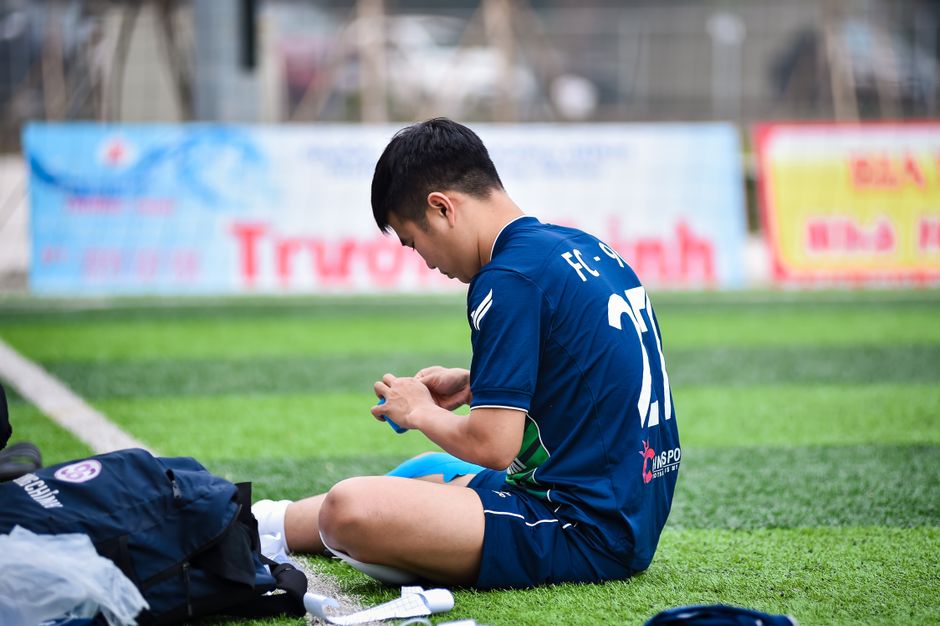
The Cumulative Strain
It’s not the one tackle that ends your season. It’s the micro-tears that don’t heal because you went back to the office on Monday, sat in a chair for eight hours, and didn't move. That stiffness becomes chronic. It changes your gait. When your gait changes, your back goes out. Then your knee swells up. Suddenly, you’re on the sidelines.
Building a Routine Without a Physio Team
You don't need a medical degree, but you do need consistency. You don't have time for two-hour gym sessions. I get that. I didn't either. But if you have fifteen minutes, you have enough time to save your career.
Effective injury prevention low training isn't about running until you vomit. It is about bulletproofing the joints. It is about making sure that when you take that hit on a Saturday, your muscles are actually prepared to absorb the force.
The "Living Room" Protocol
You can do this at home. No fancy gear. No overpriced gym membership required.
- Bulgarian Split Squats: These are king for knee stability. If your knees hurt, you need these. Copenhagen Planks: The best way to prevent adductor strains, which are the plague of lower-league football. Nordic Hamstring Curls: Use the couch or a heavy piece of furniture to anchor your feet. Single-leg Balance: Do this while you’re brushing your teeth. It fires the stabilizers in your ankles.
Recommended Weekly Schedule for the Part-Timer
Day Activity Goal Monday Active Recovery/Walking Flush out the stiffness. Tuesday Team Training Technical work. Wednesday S&C (15 mins) Strength and conditioning. Thursday Mobility Work Unlock the hips. Friday Complete Rest Nervous system recovery. Saturday Match Day Intensity. Sunday Recovery/Foam Roll Prep for the work week.The Surface Factor: Playing on Concrete
We play on pitches that range from pristine park grass to frozen dirt that feels like playing on a sidewalk. The surface dictates how your body reacts. If you are playing on a hard, unforgiving surface, your joints are taking a battering.
If the pitch is rock hard, your footwear matters. Stop wearing blades if the ground is like stone. Switch to a boot with more studs or a turf shoe. Your ankles will thank you. Most lower-league injuries I’ve seen weren't caused by contact; they were caused by a boot gripping a surface that refused to give way.
The Reality of Physical Duels
You will get hit. That’s football. But you can control how you take the impact. If you are strong—I mean structurally strong, not gym-bro "bench press" strong—you handle duels better.

Strength and conditioning for the part-time player isn't about looking big in the shower. It is about being able to maintain your center of gravity when a six-foot-four center-back leans into your ribs. If you don't have a strong core, you will fold. When you fold awkwardly, that’s when the ligaments snap.
Consistency is Your Only Defense
The guy who trains like a demon for three weeks and then quits because he’s "too busy" is the guy who gets injured in week four. You need to do the boring stuff. Every single week. Even when you’re tired. Especially when you’re tired.
Prioritize sleep: If you aren't sleeping, you aren't recovering. No supplement replaces six hours of solid rest. Hydrate: A dehydrated muscle is a brittle muscle. It’s that simple. Small doses: Three 15-minute sessions are better than one 60-minute session that leaves you too sore to work.Final Thoughts
Being a part-time player means living a life of compromise. You aren't a pro. You don't have the budget, the medical team, or the time. But you still have the game. The game is the best part of our lives, even if it makes walking to the car on a Monday morning feel like a trek across the desert.
Stop pretending you’re a professional. Respect the limitations of your body. Be consistent with your strength and conditioning, even if it’s just ten minutes on a Wednesday. And for the love of everything, stop trying to prove how "tough" you are by playing through a grade-two tear. There is no medal for that.
Just get your gear together, do the prep, and try to make it to next Saturday in one piece. That’s the only victory that matters when you’ve got to be back at your desk on Monday.